PhiEaglesfan712
-
Posts
1,855 -
Joined
-
Last visited
Content Type
Profiles
Blogs
Forums
American Weather
Media Demo
Store
Gallery
Everything posted by PhiEaglesfan712
-
2026-2027 Record-breaking El Nino
PhiEaglesfan712 replied to Stormchaserchuck1's topic in Weather Forecasting and Discussion
Yeah, that plunge looks like 1973, 1988, 1998, 2010 territory. All of those years resulted in a backlash, strong la nina. -
More like 2011 and 2013. Those were at least warm in the beginning before going absolutely cold in late July/early August. 2004 and 2009 were cold almost all the way throughout.
-
Almost like June, very warm first half of the month, not so much the 2nd half. I bet if you put the first half of June with the first half of July, it would be close to a record warm month, and if you put the 2nd half of June with the 2nd half of July, it would probably be a Top 10 coldest month.
-
2026-2027 Record-breaking El Nino
PhiEaglesfan712 replied to Stormchaserchuck1's topic in Weather Forecasting and Discussion
Interesting to note that each of these events were immediately followed by a strong la nina (1998-2000 and 88-89). -
2026-2027 Record-breaking El Nino
PhiEaglesfan712 replied to Stormchaserchuck1's topic in Weather Forecasting and Discussion
People forget that our coldest winter CONUS in the 21st century happened during a strong el nino. -
2026-2027 Record-breaking El Nino
PhiEaglesfan712 replied to Stormchaserchuck1's topic in Weather Forecasting and Discussion
I can even see the el nino being so strong that it carries over into a 2nd year, but ending in fall 2027. This will give a head start to developing la nina, which peaks very strong in 2028-29, kind of like 1988-89. It will probably be a one-year la nina, but boy, will it be very strong. -
Almost like August/September 1999, which climaxed with Hurricane Floyd. It put paused to a long running drought. If not for that, knowing what came after, we would have had a near 5-year continuous drought.
-
It probably happens a lot more often. All I know is that there was no weathergami today.
-
In honor of LeBron going to the Sixers, let's change the lyrics of Will Smith's "Miami" to fit a more Philadelphia theme: Uh, uh, yeah, yeah, yeah, yeah, uh Philadelphia, uh, uh Southeast Pennsylvania, bringin the Sixers , uh Haha, can y'all feel that Can y'all feel that Jig it out, uh Here I am in the place where I come let go Philadelphia the bass and the sunset low Everyday like a mardi gras, everybody party all day No work all play, okay So we sip a little something, lay to rest the spill Me an Charlie at the bar runnin' up a high bill Nothin' less than ill, when we dress to kill Every time the ladies pass, they be like "hi Will" Can y'all feel me, all ages and races Real sweet faces Every different nation, Spanish, Hatian, Indian, Jamaican Black, White, Cuban, and Asian I only came for two days of playing But every time I come I always wind up stayin' This the type of town I could spend a few days in Philadelphia the city that keeps the roof blazin' Party in the city where the Sixers are on All night, on the beach 'til the break of dawn "Welcome to Philadelphia" "Bienvenidos a Philadelphia" Bouncin' in the club where the Sixers are on All night, on the beach 'til the break of dawn I'm goin to Philadelphia "Welcome to Philadelphia" Yo I heard the rainstorms ain't nothin' to mess with But I can't feel a drip on the strip, it's a trip Ladies half-dressed, fully equipped And they be screamin out, "Will we loved your last hit" So I'm thinkin' I'ma scoot me somethin' hot In this salsa-merengue melting pot Hottest club in the city, and it's right on the beach Temperature get to ya, it's about to reach Five-hundred degrees in the Delaware Bay With the hot mamis screaming "¡Ay papi!" Everytime I come to town, they be spottin' me In the drop Bentley, ain't no stoppin' me So, cash in your dough and flow to this fashion show Pound for pound anywhere you go Yo, ain't no city in the world like this An if you ask how I know I gots ta plead the fifth "Philadelphia" Party in the city where the Sixers are on All night, on the beach 'til the break of dawn "Welcome to Philadelphia" "Bienvenidos a Philadelphia" Bouncin' in the club where the Sixers are on All night, on the beach 'til the break of dawn I'm goin to Philadelphia "Welcome to Philadelphia" Don't get me wrong, Chi-town got it goin' on And New York is the city that we know don't sleep And we all know that L.A. and Miami stay jiggy But on the sneak, Philadelphia bringin' Sixers for real Y'all don't understand I never seen so many Dominican women with cinnimon tans Mira, this is the plan Take a walk on the beach, draw a heart in the sand Gimmie your hand Damn, you look sexy Let's go to my yacht, in Rehoboth Beach Ride my jetskis, loungin' in the palm trees 'Cause you gotta have cheese for the summerhouse piece on Southeast Pennsylvania Water so clear, you can see to the bottom Hundred-thousand dollar cars, e'ybody got 'em Ain't no surprise in the club to see Sly, Stallone Philadelphia, my fourth home "Philadelphia" Party in the city where the Sixers are on All night, on the beach 'til the break of dawn "Welcome to Philadelphia" "Bienvenidos a Philadelphia" Bouncin' in the club where the Sixers are on All night, on the beach 'til the break of dawn I'm goin' to Philadelphia "Welcome to Philadelphia" Party in the city where the Sixers are on All night, on the beach 'til the break of dawn "Welcome to Philadelphia" "Bienvenidos a Philadelphia" Bouncin' in the club where the Sixers are on All night, on the beach 'til the break of dawn I'm goin' to Philadelphia "Welcome to Philadelphia" Party in the city where the Sixers are on
-
The real difference is that 2009 was near record cold throughout in June and July. This year has had wild temperature swings (since March). The first half of June was warm. The second half not so much. The first half of July was warm. The second half of July is going to be cold.
-
2026-2027 Record-breaking El Nino
PhiEaglesfan712 replied to Stormchaserchuck1's topic in Weather Forecasting and Discussion
I think it was January 2019: 2019-01-12 37 30 33.5 -3.8 31 0 0.13 1.9 0 2019-01-13 32 29 30.5 -6.7 34 0 0.71 8.3 4 2019-01-14 37 27 32.0 -5.2 33 0 T 0.1 10 -
Not really. 2009 was cold throughout, with the exception of one week in August. 2015 was warm from July-September. 2023 was cold in June, but very warm in July and September.
-
I will go with colder than 94-95, but warmer than 09-10, for this upcoming winter. Depends on the PDO, though. If it stays deeply negative, it will end up closer to 94-95, but if it can go towards neutral, then it will end up closer to 09-10.
-
E PA/NJ/DE Summer 2026 Obs/Discussion
PhiEaglesfan712 replied to PhiEaglesfan712's topic in Philadelphia Region
I think she's retiring. -
2026-2027 Record-breaking El Nino
PhiEaglesfan712 replied to Stormchaserchuck1's topic in Weather Forecasting and Discussion
I thought July 2012 broke the record for the warmest month. Or is that still in verification stage? -
2026-2027 Record-breaking El Nino
PhiEaglesfan712 replied to Stormchaserchuck1's topic in Weather Forecasting and Discussion
Barring a major volcanic eruption, like we had with Pinatubo in 1991, I'm almost certain next summer in most of the Eastern US is going to be record breaking hot. We may not see the high temps of 2011 or earlier this month, but the heat will be more consistent throughout like in 2010 and 2016 (both post-el nino summers). -
It actually happened in 2013: 2013-08-01 74 68 71.0 -7.4 0 6 1.33 0.0 0 2013-08-02 86 68 77.0 -1.3 0 12 0.00 0.0 0 2013-08-03 79 68 73.5 -4.8 0 9 T 0.0 0 2013-08-04 80 66 73.0 -5.2 0 8 0.00 0.0 0 2013-08-05 78 62 70.0 -8.1 0 5 0.00 0.0 0 2013-08-06 78 63 70.5 -7.5 0 6 T 0.0 0 2013-08-07 76 68 72.0 -5.9 0 7 0.06 0.0 0 2013-08-08 87 71 79.0 1.2 0 14 0.35 0.0 0 2013-08-09 88 76 82.0 4.2 0 17 T 0.0 0 2013-08-10 84 73 78.5 0.8 0 14 0.00 0.0 0 2013-08-11 85 66 75.5 -2.1 0 11 0.00 0.0 0 2013-08-12 86 72 79.0 1.5 0 14 0.00 0.0 0 2013-08-13 83 68 75.5 -1.9 0 11 2.02 0.0 0 2013-08-14 76 63 69.5 -7.8 0 5 0.00 0.0 0 2013-08-15 78 58 68.0 -9.1 0 3 0.00 0.0 0 2013-08-16 81 60 70.5 -6.5 0 6 0.00 0.0 0 2013-08-17 82 63 72.5 -4.4 0 8 0.00 0.0 0 2013-08-18 77 66 71.5 -5.3 0 7 0.03 0.0 0 2013-08-19 77 65 71.0 -5.7 0 6 0.00 0.0 0 2013-08-20 87 66 76.5 0.0 0 12 0.00 0.0 0 2013-08-21 89 70 79.5 3.1 0 15 0.00 0.0 0 2013-08-22 85 70 77.5 1.3 0 13 1.08 0.0 0 2013-08-23 77 68 72.5 -3.6 0 8 T 0.0 0 2013-08-24 82 65 73.5 -2.4 0 9 0.00 0.0 0 2013-08-25 81 61 71.0 -4.8 0 6 0.00 0.0 0 2013-08-26 86 65 75.5 -0.1 0 11 T 0.0 0 2013-08-27 89 73 81.0 5.6 0 16 0.00 0.0 0 2013-08-28 76 72 74.0 -1.2 0 9 1.04 0.0 0 2013-08-29 83 71 77.0 2.0 0 12 T 0.0 0 2013-08-30 83 69 76.0 1.2 0 11 T 0.0 0 2013-08-31 88 72 80.0 5.4 0 15 0.00 0.0 0
-
15 years ago saw one of the most widespread heatwaves for this area. Newark set an all-time record of 108: https://www.wunderground.com/blog/JeffMasters/july-22-2011-a-day-of-records.html
-
2026-2027 Record-breaking El Nino
PhiEaglesfan712 replied to Stormchaserchuck1's topic in Weather Forecasting and Discussion
Yeah, the connection has been spotty this morning. -
2026-2027 Record-breaking El Nino
PhiEaglesfan712 replied to Stormchaserchuck1's topic in Weather Forecasting and Discussion
Yes, it was Feb 2015, but if something like that happened now, someone will be quick to point out that +10 temp departure in Las Vegas or somewhere out West. -
2026-2027 Record-breaking El Nino
PhiEaglesfan712 replied to Stormchaserchuck1's topic in Weather Forecasting and Discussion
Yes, I'm pretty sure the August spike was 2023, and likely the September spike as well. I remember there being an anomolous heatwave in South America in August 2023, and another one the following month. -
2026-2027 Record-breaking El Nino
PhiEaglesfan712 replied to Stormchaserchuck1's topic in Weather Forecasting and Discussion
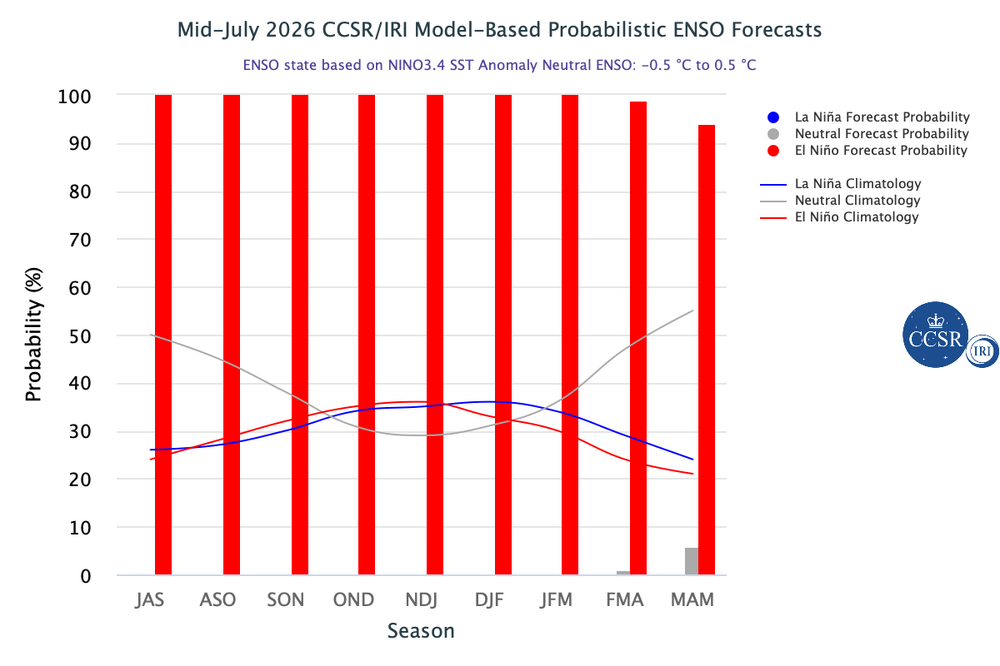
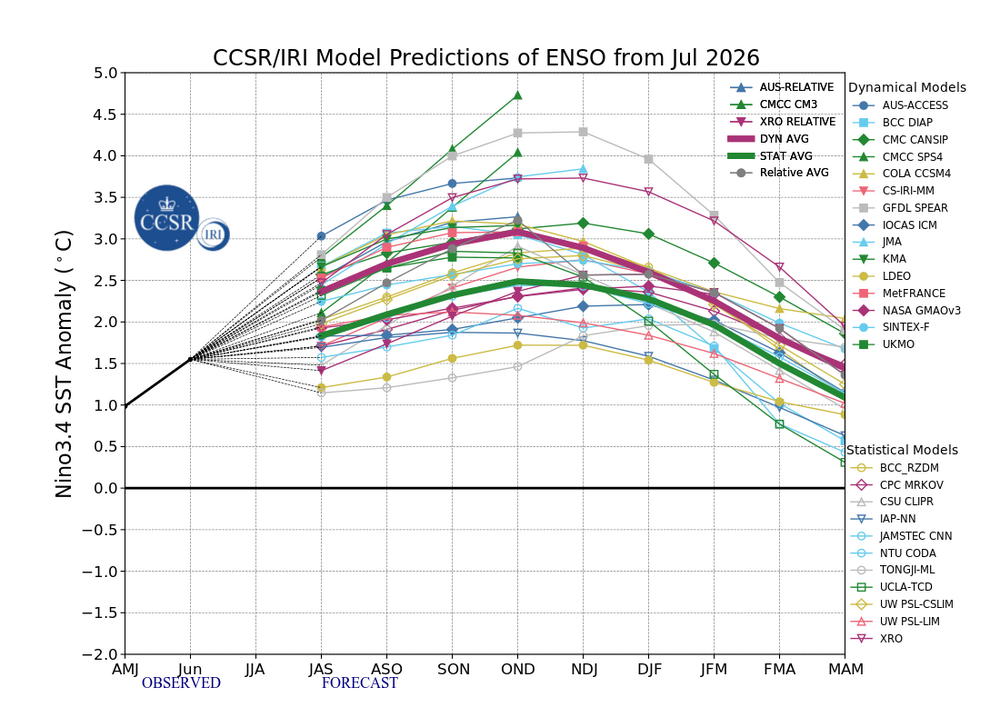
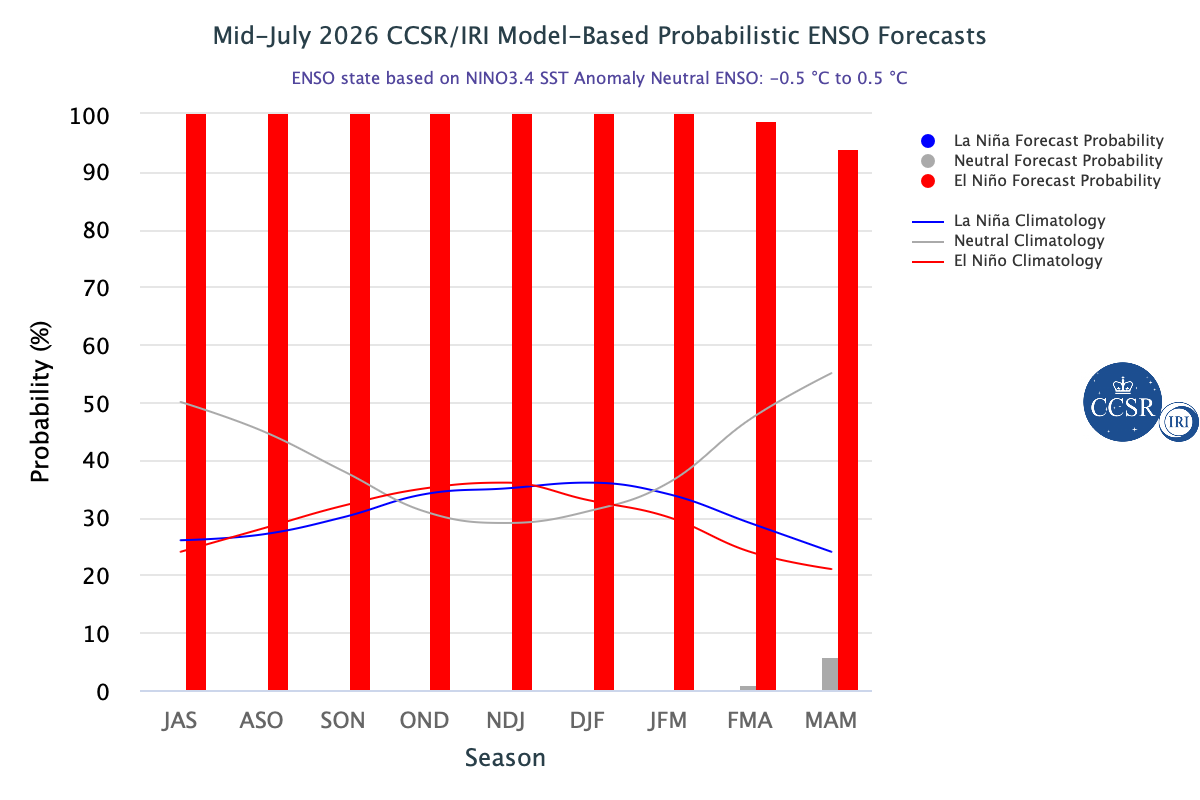
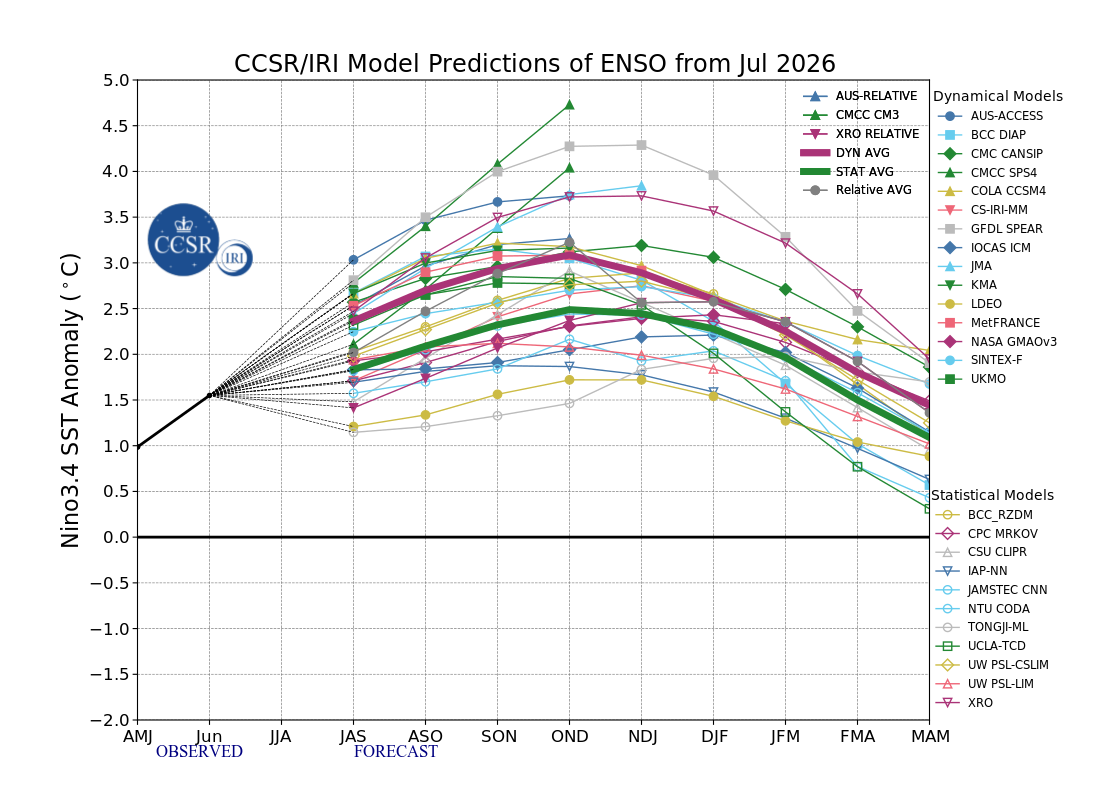
-
Last year was a frontloaded warm summer, with the heat wave in late June and the warmth lasting all through July. The summer pretty much ended after July 31.
-
Probably not. I think we've already seen the worst of the heat. Unlike those years, we've had heat early and often, with 80s as early as March, 90s as early as April, and 100+ earlier this month. I highly doubt we see more 90-degree days in August than in June or July.
-
2026-2027 Record-breaking El Nino
PhiEaglesfan712 replied to Stormchaserchuck1's topic in Weather Forecasting and Discussion
94-95 was really skewed by February. The rest of that winter (November-January and March) absolutely torched in the Eastern US and was actually cool in the West. I'd say 14-15 was the best match for 25-26.